
How Foster City Residents Are Found
A useful Foster City residents directory search begins by naming the question. If the question is who owns a parcel, use the San Mateo County Assessor and the county Property Maps. If it concerns a recorded transfer, move from the assessed owner to the ACRE grantor-grantee index. A person checking their own registration uses the California or county voter-status form, which is not a public name list. A public court party, permit contact, business officer, probate heir, or historical subscriber each comes from a separate keeper.
The strongest trail is corroborative. A parcel gives an APN and legal description. A deed supplies named parties and a recording date. A permit adds dated work and public contacts. A directory or obituary can add a past household clue. None of these alone proves that every person at an address lives there now. The county roll identifies an assessed owner, while the city permit system identifies a project and its contacts. Keep those roles separate as you work.
- Start with the address or name you know, and decide whether the goal is ownership, a public case, a family link, or an older household.
- Use San Mateo County Property Maps to capture the parcel, APN, and recorded-map links.
- Compare the parcel with the assessment roll, then search the owner as a grantee in the deed index.
- Use the right state or county form for voter status and vital records. A self-lookup is not a street browse.
- Finish with the library, court clerk, City Clerk, or a California Public Records Act request when the online index stops.
Where Foster City Keeps Resident Records
Foster City records sit at more than one level. The City Clerk at City Hall, 610 Foster City Boulevard, manages municipal legislation and sends public searches to the city Laserfiche portal or a California Public Records Act request. San Mateo County ACRE keeps the assessor roll, maps, recorded documents, county clerk filings, vital records, and elections functions. The Superior Court in Redwood City handles Foster City civil, criminal, family, probate, small-claims, and traffic matters.
San Mateo County ACRE
555 County Center
Redwood City, CA 94063
650-363-4500
San Mateo County Assessor
555 County Center, third floor
Redwood City, CA 94063
650-363-4500
Foster City City Clerk
610 Foster City Boulevard
Foster City, CA 94404
650-286-3200
The ACRE counter and public terminals matter when a web result points to a document but does not show its image. The City Clerk is the fallback for municipal writings, while the county court clerk and Records Management handle case copies. The keeper determines what is public, what is redacted, and what needs a request.
The County Clerk-Recorder service page shows the county office route for recorded documents and related filings.
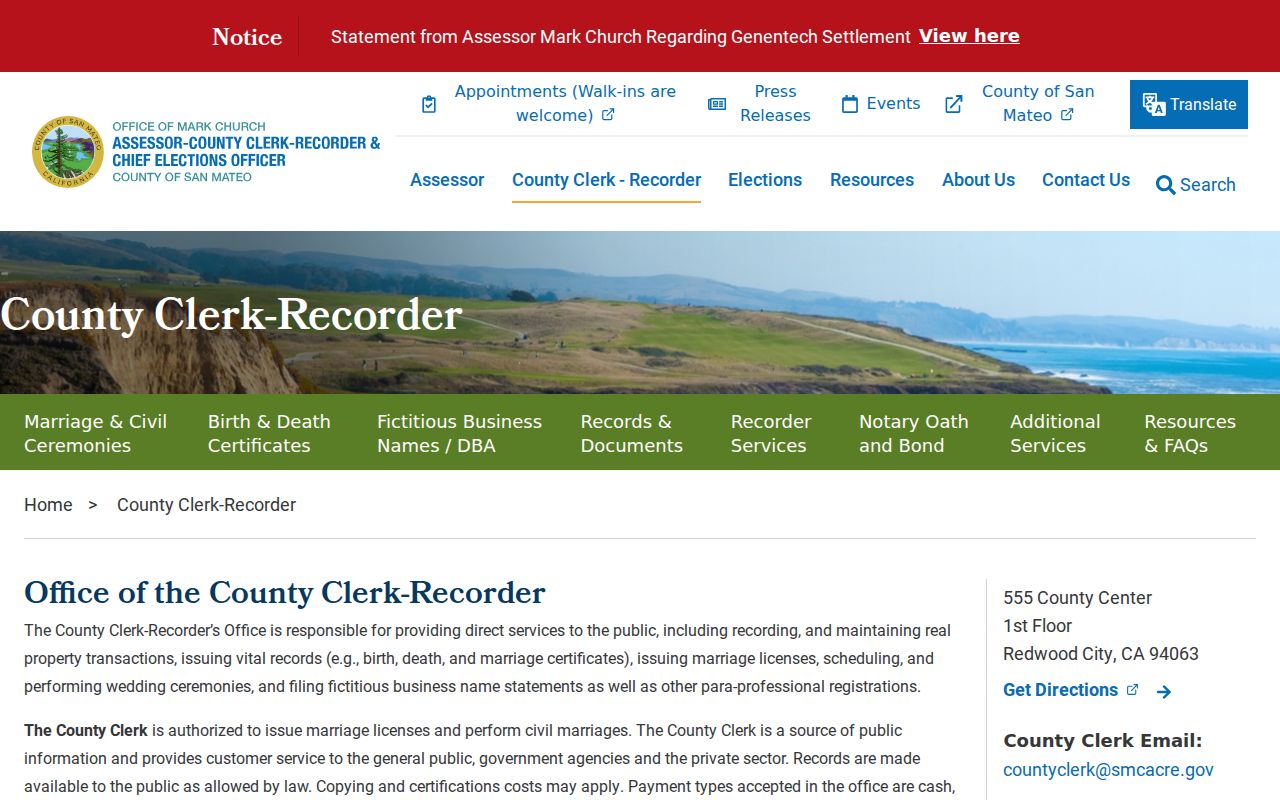
The county office is the records custodian for many property and civil filings, but a service page is only an orientation point. Use the named record type and its current request channel.
San Mateo County Assessor information identifies the office behind the assessment roll and property questions.
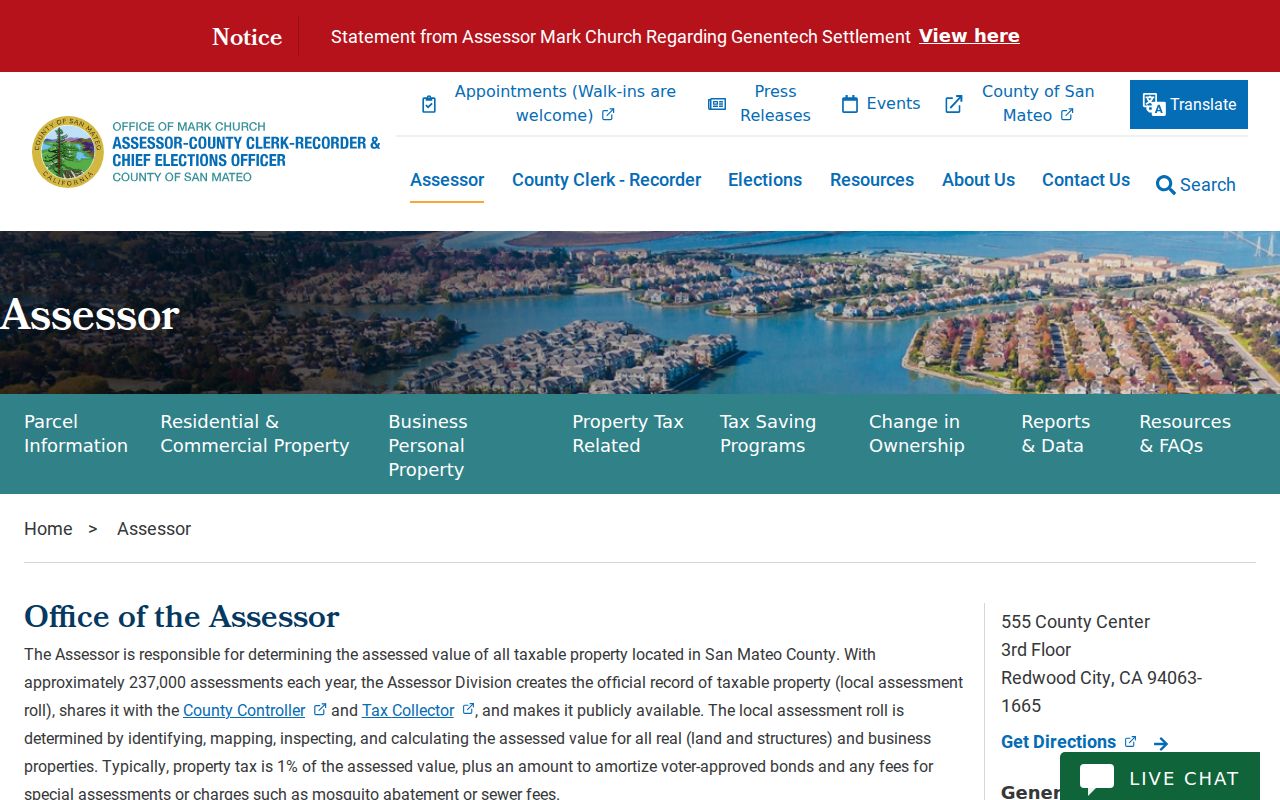
That distinction keeps a property source tied to its county custodian instead of treating a directory search as a citywide roster.
Foster City Has No Official Resident List
There is no legitimate official roster of every Foster City resident. An assessed owner may live elsewhere. A tax mailing address may belong to a trust, agent, business, or second property. A permit contact is tied to a project, not a whole household. The voter-status form asks an individual to verify their own registration and does not expose a public name-and-address directory.
California Elections Code §§2180-2194 restrict voter-file access and require a permitted purpose for a file product. California's Safe at Home program also protects qualifying participants with a substitute mailing address. Public records can answer narrow questions, but they should not be combined into a claim about an unlisted occupant. The useful Foster City residents directory is a set of source-specific trails.
Foster City's records page explains the city portal, the request form, and exemptions under Government Code §§7920.530, 7920.545, and the exemption provisions beginning at §7927. Personnel and medical writings that would create an unwarranted invasion of privacy are examples of records that may be withheld.
The city records and CPRA page shows how a portal search and a CPRA request fit together.
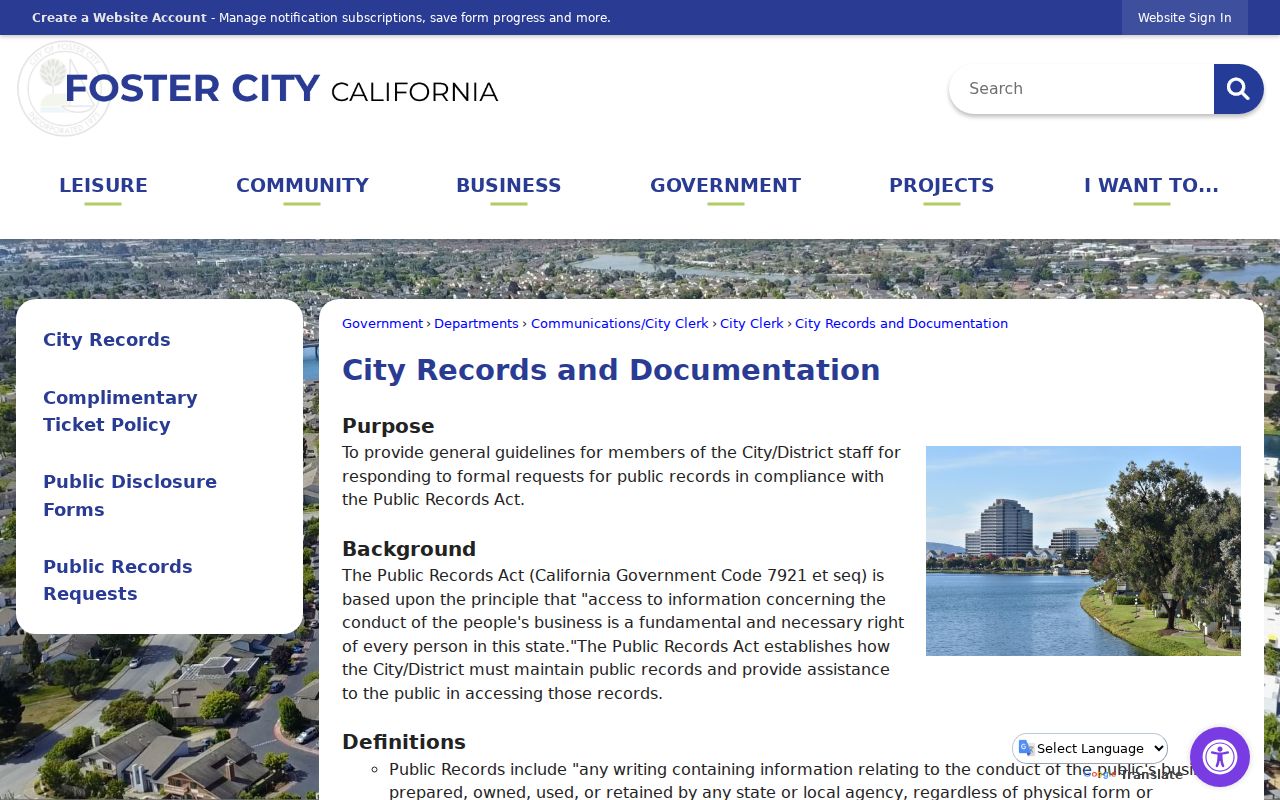
Use the portal for a document already published, and use the City Clerk when a municipal record needs a formal request or clarification.
That boundary is practical, not just legal. Treat a search result as a pointer to a custodian record, then ask what the record actually establishes.
Map a Foster City Address
Address work is safer when it starts with the parcel. The county Property Maps service can search by street address, APN, assessor map book and page, or recorded-map volume and page. A result can show the APN, parcel outline, assessor-map link, and available recorded maps. Save those identifiers before looking for a person.
Foster City was built over reclaimed Brewer Island land and developed by tract and neighborhood rather than by a simple rectangular grid. Lagoons, bridges, condominiums, and shared parcels can break a guessed sequence of house numbers. The legal description and APN are steadier keys than a postal label or a nearby landmark.
The county map instructions show the parcel and recorded-map search modes used for Foster City. The map layer is a record locator, not a resident list. It helps you choose the right custodian and avoid sending a request to the wrong office.
The county assessor online-services page is the companion starting point for assessment and property-tax tools.
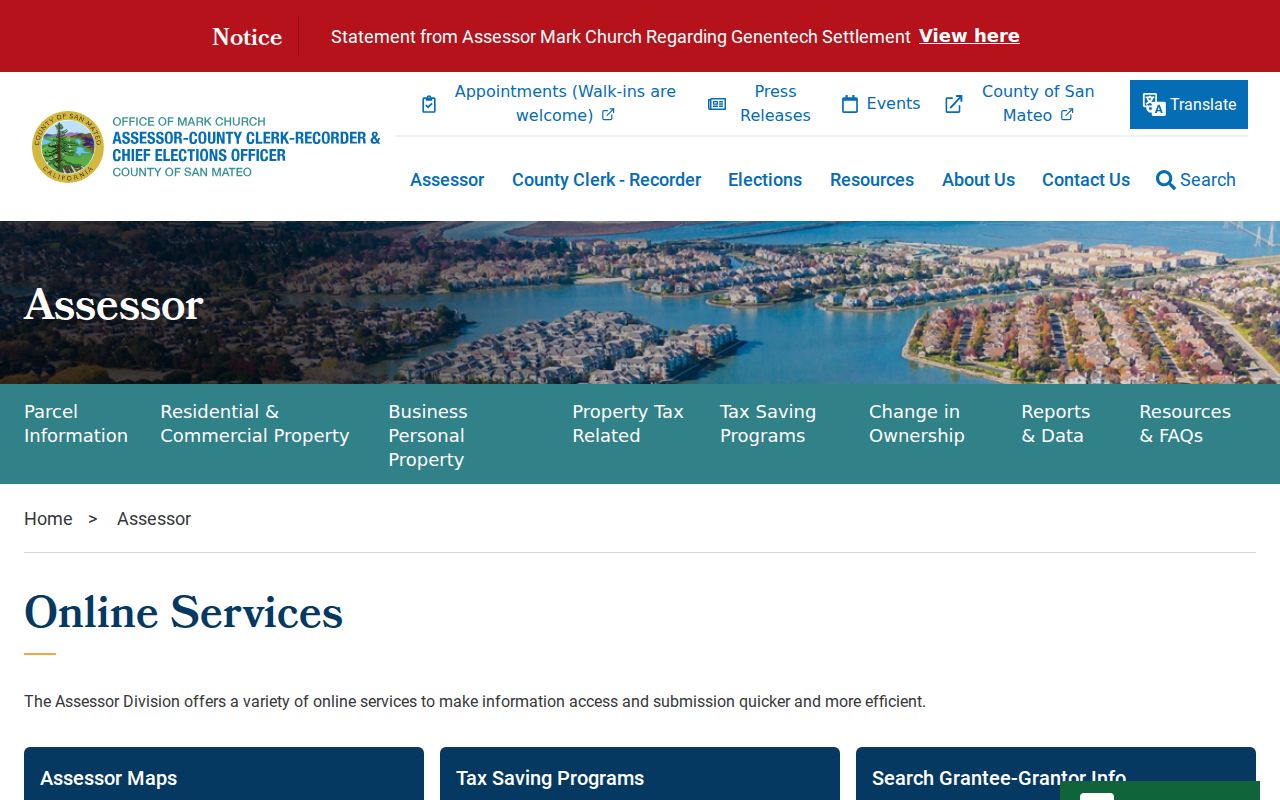
Use the map first when the address is uncertain, then read the roll as an assessed-property record rather than a household list.
For the full street-by-street parcel chain, use the Foster City street directory workflow after the APN is known.
Once an APN is in hand, compare the physical situs with any tax mailing address. Those two addresses may match, but a mismatch is not proof of where an owner or any other person lives.
County parcel data uses the situs address as the location key. That distinction keeps a name search tied to the correct lot, tract, and unit.
Foster City Deeds from Owner to Owner
The recorded-document index creates a legal ownership trail. Search a current assessed owner as grantee, note the document number, date, grantor, and legal description, then search that grantor as grantee in an earlier period. Continue backward while checking the APN and tract description at each step. The index is free, but its web database leaves document images out for privacy. Copies are ordered separately or viewed at public terminals.
The ACRE grantor-grantee entry page is the right starting point. A recorded deed can confirm a party to a transfer, not continuous occupancy. Liens, reconveyances, and other filings can also appear, so read the document type before treating a hit as an ownership change.
The county publishes a mail-copy route through its customer service desk. A request supplies party names, document type, recording date, recording number, payment, and a self-addressed stamped envelope. Regular recorded copies are listed as $5 for the first page of each document plus $1 for each additional page, with $5 more for certification. Confirm the current fee before sending payment.
In the Foster City residents directory workflow, the deed trail answers who held title and when. It does not name every person who occupied the parcel.
Note: A deed index hit is a pointer, so preserve the document number and obtain the image before drawing a conclusion from a party name.
Foster City Permit History by Address
Foster City's eTRAKiT permit search adds a dated municipal layer to the property trail. The public form searches by an address or permit and project number, with company or license number options in related modules. Results can be opened through Permit Info, Site Info, Contacts, Fees, Inspections, Chronology, Conditions, and Reviews.
The Foster City permit search shows the fields and result tabs a researcher can use without an account. Accounts are needed to apply and pay, while public searches are free. The Building Division lists cddpermit@fostercity.org and 650-286-3227; its current counter hours are Monday through Friday, 8 to 12 and 1 to 4:30.
A sample record for 601 Teal Street A, activity BLDG2022-0630, shows a type and subtype, description, status, application and issue dates, final or expiration dates, address, APN, subdivision, tract, block, lot, neighborhood, lot size, related permits, attachments, inspections, and chronology. That inventory makes eTRAKiT useful for house history. A named contact remains a project contact, not proof of residence.
For houses built before 1972, the city says original plans may be missing. At incorporation, the county gave Foster City microfilm copies of building-permit applications and only limited site plans. A CPRA request can still be worth trying, but the gap should be recorded rather than filled with guesses.
Today's Foster City Resident Sources
Current sources look like directories only when their scope is kept clear. A property roll lists assessed ownership. The voter tool confirms one voter's own status. A deed index lists parties to recorded documents. City Laserfiche can expose public municipal writings. Business and license portals show public roles and addresses of record. Each source answers a different question.
| Source | What It Can Confirm | Keeper | Access |
|---|---|---|---|
| Assessment roll | Assessed owner, APN, values, exemptions | San Mateo ACRE Assessor | Public roll and summaries |
| Grantor-grantee index | Recorded parties and document trail | County Recorder | Free index, image by order or terminal |
| eTRAKiT | Permit contacts, dates, inspections, site/APN | Foster City | Free public search |
| Voter status | One person's own registration status | California SOS and ACRE Elections | Self-lookup or statutory file request |
| Business and license files | Entity, agent, license, or public role | California SOS or DCA | Free public search, some copies extra |
The Assessor online-services page is a useful county starting point, but an unrestricted owner-name search was not verified in official sources. The State Controller's Unclaimed Property search can corroborate a past name and place association, while a claim still needs proof of entitlement. These sources belong in a careful record trail, not a single blended profile.
The county's annual roll summaries put the assessment source in context for a large county record system.
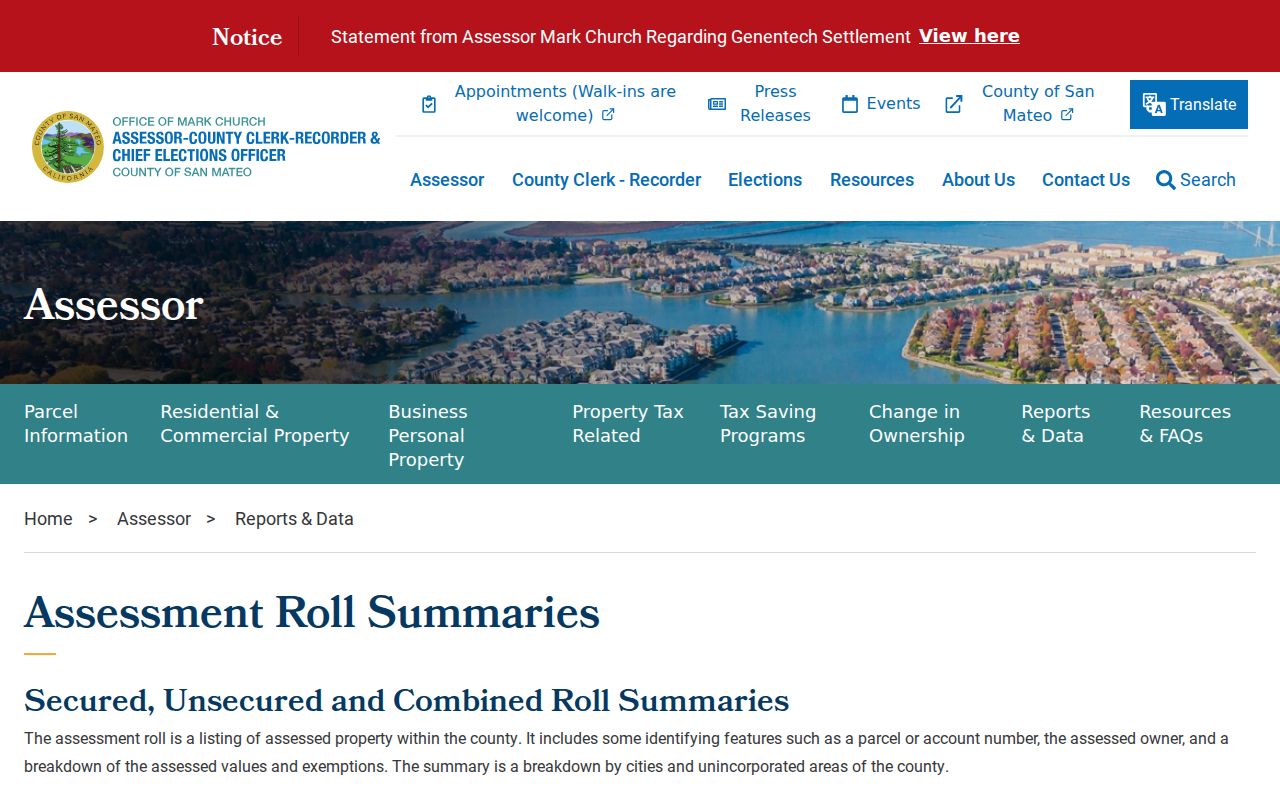
A summary can describe the roll's scale and categories, but it does not replace the parcel-level record or establish occupancy.
Foster City Voter Status and Privacy
California's voter tools are designed around a person checking their own record. The county My Election Info form asks for a house number, ZIP code, and birth date. It returns labels such as registration status, party affiliation, precinct number, and election information. There is no name field, and the form does not browse a street.
| House number | Text field; use the number only. |
|---|---|
| ZIP code | Five-digit number for the voter lookup. |
| Birth date | Month, day, and year selectors. |
| Result labels | Registration status, party affiliation, precinct number, and election information. |
San Mateo County's voter self-service form illustrates the privacy boundary. A full voter-information file requires a written application, payment, requester information, and a permitted election, scholarly, journalistic, political, or governmental purpose. The county lists a $125 voter-information file and a printed-list charge of $0.50 per 1,000 voters. Current forms and rules control.
California's voter-status page presents the state-level self-check that complements the county form.
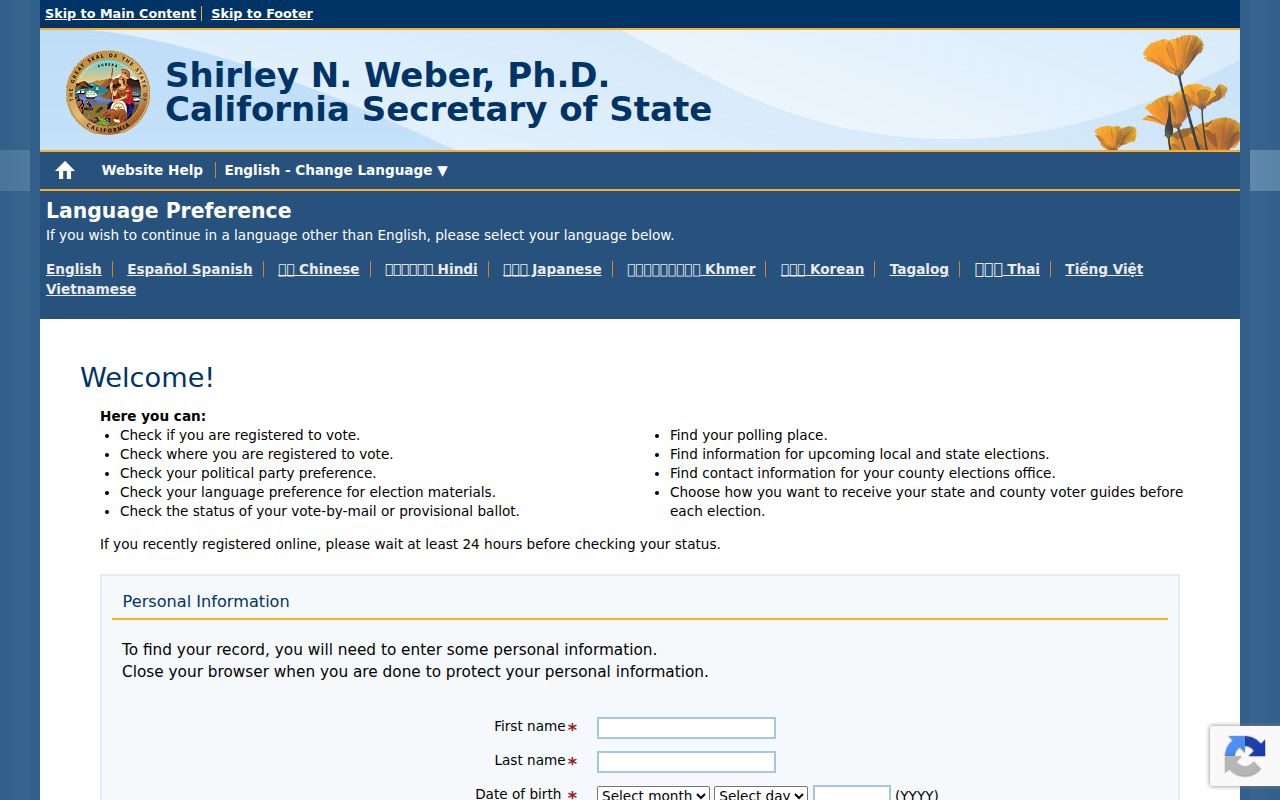
The state form confirms an individual record; it does not turn voter data into a public residents directory.
Driver-license and Social Security numbers, signatures, and protected addresses stay confidential. Safe at Home protections override ordinary address assumptions. A Foster City residents directory should never turn a self-lookup form into a public block roster.
San Mateo Court Trails for Foster City
Foster City cases run through the Superior Court of California, County of San Mateo. The MIDX index separates appeals, civil, criminal, family, probate, and small claims. Person Search uses first and last name fields with a two-character minimum, while Case Number Search needs at least five alphanumeric characters. Filing Date Search accepts a maximum five-calendar-day range.
San Mateo MIDX can return a case number, case name, filing date, party type, and source division. Odyssey provides registers of actions for nonconfidential, nonsealed civil, criminal, family, probate, small-claims, and traffic matters. Adoption, juvenile, mental-health, sealed, and confidential material is absent or restricted. A public index is not the filed record.
The Superior Court online-services page lists the separate case systems that serve Foster City.
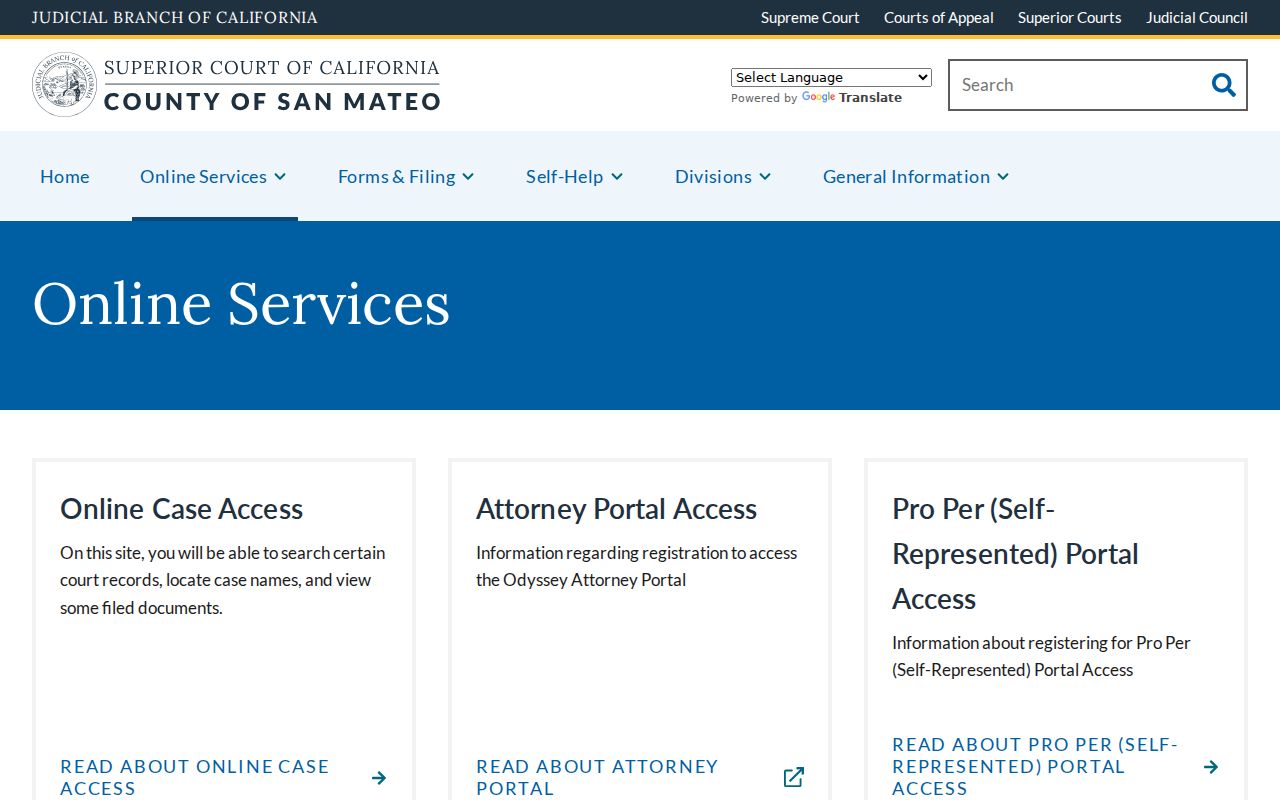
Choose the case module before searching, then request the register or file when the index alone cannot answer the question.
For a copy, the court asks for a case number, parties, an approximate filing date, and a document description. Records Management at 400 County Center, first floor, Room A, Redwood City, accepts mail-copy requests with a postage-paid envelope and a blank check marked with a not-to-exceed amount. The court lists a response within 30 days and notes that it does not conduct research.
Federal matters use PACER for the Northern District of California. Keep local and federal dockets distinct, and compare names with a date, role, location, or linked parcel before deciding that two entries refer to one person.
Foster City Paths for Heirs and Classmates
A person-focused search often needs a record that was never meant to be a resident list. Probate filings may name a decedent, petitioner, executor, administrator, or heirs. California adoption information is confidential and belongs with authorized state channels, not a public resident index. Yearbooks, library databases, school archives, and newspapers can help reconnect former classmates.
Business and professional records can separate a public role from a private address. California bizfile searches entities by name or number and may show formation, status, jurisdiction, addresses, agent, and statements of information. The Department of Consumer Affairs search can narrow a license by name, number, city, type, board, status, or discipline. A registered agent or address of record is not proof of residence.
California bizfile Online is the official entity search used to check a business connection.
The entity result can identify an organization and its filing role, but it should not be recast as a private address record.
The Department of Consumer Affairs license search verifies public professional records.
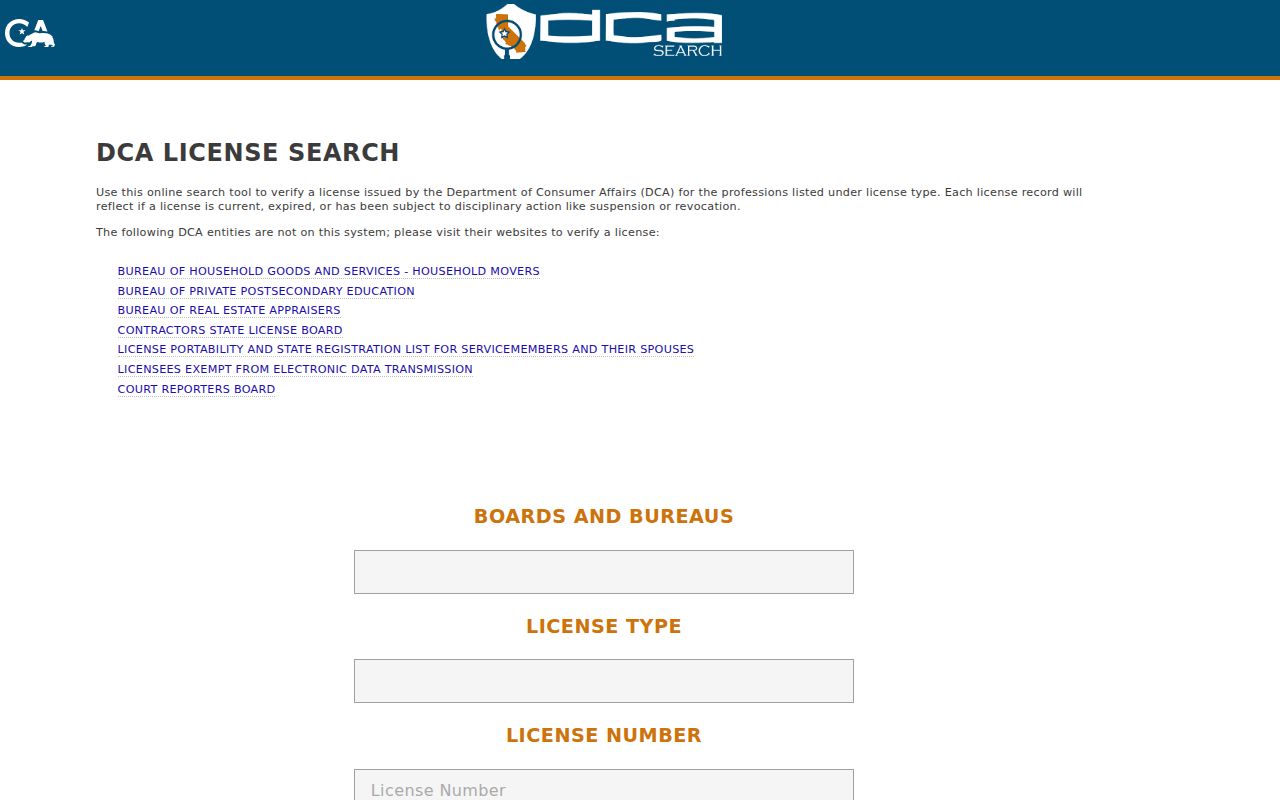
License details add a public credential or role to a name match and still need a separate address or date check.
The State Controller's Unclaimed Property search accepts a last name or business name, first name, city, ZIP code, and property ID. It is free to search, but a claimant must prove identity and entitlement. A public result may support a past association; it does not establish a current home.
The State Controller's unclaimed-property search is a free state source for a name and place clue.
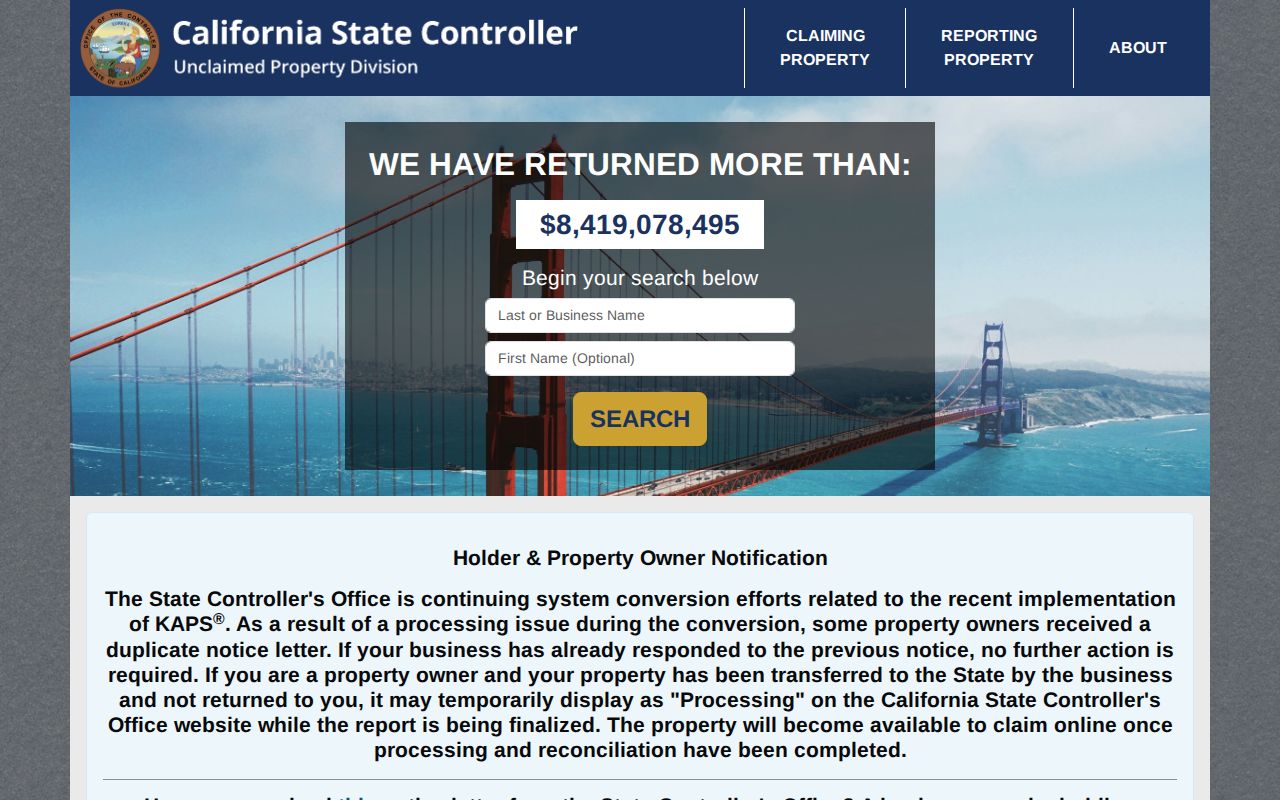
Use it as a lead for an heir or former name, then prove the relationship through the custodian's claim process.
This is where a Foster City residents directory works best as a set of leads. Verify a family link in the filed probate petition, a classmate in a dated yearbook, or a business connection in the official entity file.
Foster City's 1958 to 1971 Record Divide
Foster City has a sharp historical dividing line. T. Jack Foster and partners obtained an option on Brewer Island in 1958. Reclamation and construction accelerated in 1961, first homes were completed in 1963, first residents arrived in 1964, and incorporation followed on April 27, 1971. City Hall opened in 1972. Earlier names may belong to Brewer Island or San Mateo County rather than Foster City.
The official Foster City history explains why a nineteenth-century city directory search is a poor fit. County land records, development maps, builder names, early telephone books, permits, newspapers, and oral history do more work for the 1960s. The history of a planned community is often in tract and infrastructure records before it is in a city heading.
Builders such as Eichler Homes, Duc & Elliott, and Kay Homes appear in the cultural-resources material. Neighborhood and tract terms can therefore be useful search keys beside a street address. The community profile describes roughly 2,600 acres and nine original residential neighborhoods, with development proceeding neighborhood by neighborhood.
For a longer historical shelf, the Foster City city directory collections page follows the telephone books, regional directories, census, maps, and Historical Society sources without treating them as a modern resident roll.
Official Rolls and Compiled Directories
Official records and compiled people-finding products differ in both source and remedy. An official roll has a named custodian, a defined field set, and an access rule. A compiled product may merge public and licensed data, lag updates, or join two people with the same name. If an official entry is wrong, correct it with the originating office. A compiled entry needs a separate correction request to its publisher.
| Path | Strength | Limit | Best next check |
|---|---|---|---|
| County roll or map | Parcel and assessed ownership | Not a household list | Deed and legal description |
| City permit file | Dated project and site details | Contact is not an occupant | APN and permit chronology |
| Library directory | Name, address, and past context | Canvass date and omissions | Adjacent year or newspaper |
| Compiled directory product | May gather many clues | Mixed sources and stale matches | Original custodian record |
Use the free official index first when one exists. Pay for a certified copy only when the record or a formal proof requires it. A source that shows less can still be stronger if its scope and date are clear.
Foster City Requests and Protected Addresses
The California Public Records Act, Government Code §§7920.000 and following, gives access to nonexempt state and local writings. An agency generally makes an initial determination within 10 days, with a written extension of up to 14 days in unusual circumstances. Inspection is generally free, while direct duplication or specified electronic work can carry a charge. CPRA does not require an agency to create a new record or answer a question that no record answers.
Start with Foster City's Laserfiche portal. If the writing is absent, use the City Clerk's request form and describe the date, department, record type, address, permit, or council action. For a deed image, use ACRE's copy procedure. For a court file, use the court's copy route. For a vital record, use the current county or CDPH form and its eligibility rules.
Lawful personal use. Public availability does not permit stalking, threats, harassment, or intimidation. California Penal Code §646.9 and related laws can apply; protected addresses, sealed files, voter identifiers, and DMV information must not be reconstructed from other records.
California Safe at Home guidance explains the substitute-address program for qualifying survivors and specified public-facing workers. A safe Foster City residents directory respects a custodian's redactions and stops when a record is protected.
Directory Jargon for Foster City Searches
The same words recur across the county portals, but they do not mean the same thing. Read the field label before assuming what a result can prove.
- Roll
- An official list maintained for a defined purpose, such as assessment or voter registration.
- Index
- A pointer to a source document. A deed or court index entry is not the full image or file.
- Parcel
- A mapped unit of land identified by an APN, with a situs and legal description.
- Criss-cross directory
- A street- or address-ordered directory used to move from a place to a name, when a local run exists.
In Foster City, the APN and tract description are often more stable than the way a person writes a street name. A clear definition keeps a residents directory result from becoming a claim it cannot support.
Foster City Directories from Earlier Years
The historical part of a Foster City residents directory begins with regional material. The San Mateo Public Library California Collection lists San Mateo city directories from the 1900s to the present, local maps, Sanborn maps, newspaper microfilm, and clipping files from the 1940s through the 1960s. The San Mateo County Historical Association holds books, clippings, ledgers, manuscripts, newspapers, photographs, and objects dating from about 1830 to the present.
The Library of Congress provides a useful telephone-book spine: September 1951, September 1953, April 1957, April 1960, April 1973, and April 1976. The earlier volumes predate modern Foster City residents. The 1976 volume can show a subscriber name, street number and name, the locality abbreviation “Foster Cty,” and a telephone number, but not every household member or an owner mark.
San Mateo County Libraries genealogy resources point to Ancestry Library Edition inside a library building, HeritageHub obituary and death-notice coverage, HeritageQuest census material, and other databases. Access changes by card and location. The Foster City Historical Society adds living-memory artifacts and oral history for a planned community whose paper trail grows after 1958.
Use the old volume to locate a name and address, then confirm the date and identity with a deed, permit, newspaper, probate file, or another independent source. The directory shelf supplies context, not a complete current resident list.
The county clerk also maintains some historical ancillary indexes, including the naturalization index for records dated 1800 to 1991.
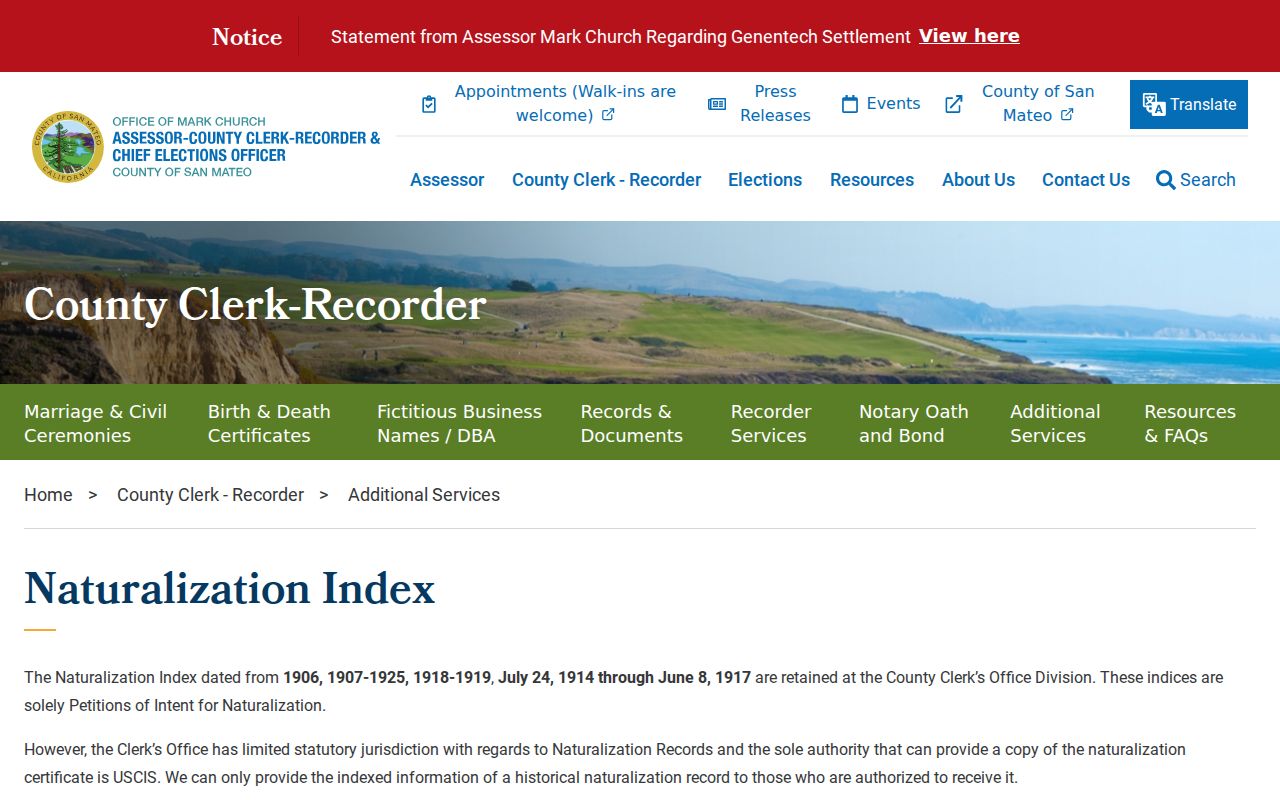
Ancillary records can corroborate an older person or name, but each must be searched for its actual public purpose.