
Where Foster City City Directories Are Held
The best city directory search starts with the collection's geography and date. San Mateo Public Library's California Collection lists city directories from the 1900s to the present, but its public description does not itemize every year or publisher. The Library of Congress telephone-book record supplies named regional volumes, including 1973 and 1976 editions that can contain Foster City subscribers. The local history shelf, not a generic city heading, is the key.
| Collection | Years or era | Where held | Access |
|---|---|---|---|
| San Mateo city directories | 1900s to present, exact run not itemized | San Mateo Public Library California Collection | Noncirculating reference collection |
| Regional telephone books | 1951, 1953, 1957, 1960, 1973, 1976 | Library of Congress; library reference desks | Digitized pages and library inquiry |
| Polk and cross-reference searches | Exact Foster City run not verified | Library, State Library, and digitized search collections | Verify each volume before relying on it |
| Foster City history | 1958 to present | City history, Laserfiche, council records | Free city sources |
| A New Town Comes of Age | Published 1985, 96 pages | Library or Historical Society inquiry | Confirm local availability |
The collection gap matters. An open search for digitized Polk volumes can show a search set without proving that a particular San Mateo or Foster City edition contains the street or subscriber sought. Ask the reference desk to confirm a volume and inspect the page before quoting it.
The digitized Polk directory search is a lead for regional volumes, not proof of a complete Foster City run.
Verify the title, year, geography, and page image for each result before treating a digitized volume as local evidence.
Foster City's 1960s Directory Story
Foster City's record history begins with a development date, not a nineteenth-century directory. T. Jack Foster and partners held an option on Brewer Island in 1958. Reclamation and large-scale work accelerated in 1961. First homes were completed in 1963, residents arrived in 1964, and the city incorporated on April 27, 1971. Those dates explain why the early regional city directory volumes may describe a predecessor geography.
The official Foster City history gives the local chronology that should sit beside any older name search.
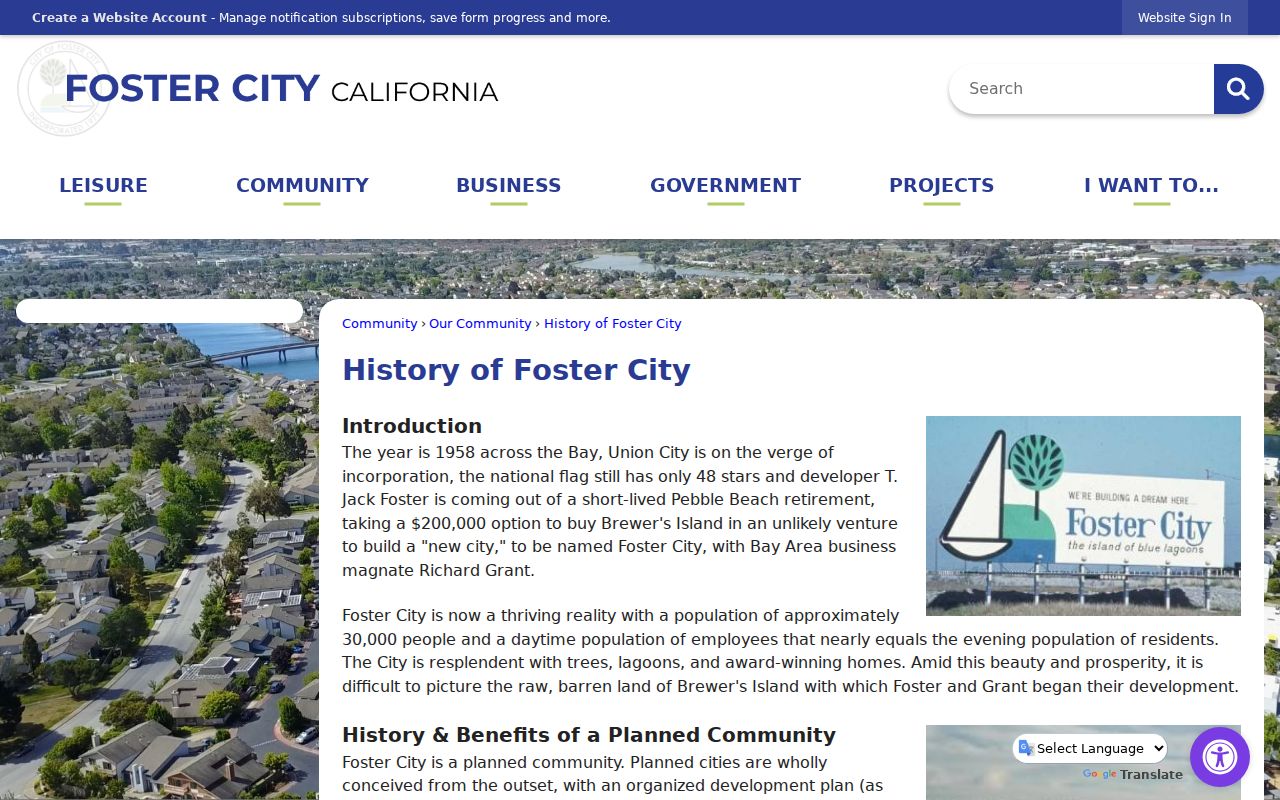
The history source helps decide whether a result belongs under Brewer Island, San Mateo County, or the incorporated city.
| 1958 | Development option associated with T. Jack Foster and Brewer Island. |
|---|---|
| 1961 | Reclamation and large-scale construction accelerated. |
| 1963-1964 | First homes were completed and first residents arrived. |
| 1971 | Residents incorporated Foster City on April 27. |
| 1972 | City Hall opened, adding municipal records to the local trail. |
Search San Mateo and Brewer Island First
When a family search reaches before incorporation, change the place term before changing the person. Try San Mateo, Brewer Island, the county, the postal locality, or the neighborhood name used in a tract record. A 1951, 1953, 1957, or 1960 telephone book predates the first Foster City residents, while the 1973 and 1976 books can hold early city-era subscribers.
The San Mateo County Historical Association's archive spans about 1830 to the present and includes maps, ledgers, newspapers, photographs, manuscripts, clippings, and objects. The San Mateo Public Library California Collection lists local maps, Sanborn maps, newspaper microfilm, and clipping files from the 1940s through the 1960s. Those sources can bridge a directory gap without pretending that a missing volume exists.
The San Mateo County Historical Association research archive provides the regional context for a name that predates Foster City's municipal heading.
Use regional holdings to frame the place, then connect the person to the later Foster City address with a dated source.
Ask Foster City Library for Directory Runs
Foster City Library belongs to San Mateo County Libraries and the Peninsula Library System. Its catalog and reference help are the practical first stop for local history, newspapers, yearbooks, and currently licensed genealogy databases. San Mateo County Libraries lists Ancestry Library Edition for use inside a library building, HeritageHub obituary and death-notice coverage, and HeritageQuest census material. Remote access rules vary by database and card.
San Mateo County Libraries genealogy resources identify the databases and reference paths that support a catalog or local-history question. Foster City Library is the local service point for that inquiry.

Ask specifically for Polk, telephone, and reverse-directory runs covering San Mateo or Foster City. The public catalog did not verify an exact local year list, so staff confirmation is part of the search.
The library's newspaper databases can add an obituary, club notice, address, or family relationship. A user-submitted obituary remains a clue. Pair it with a court, deed, vital, or directory source where identity matters.
Inside a Foster City Directory Entry
The inspected 1976 telephone volume is a white-pages arrangement rather than a verified criss-cross edition. A visible entry includes a subscriber's personal name, street number and name, the locality abbreviation “Foster Cty,” and a seven-digit telephone number. It does not identify every household member, an owner or renter mark, an occupation, or an unlisted subscriber. Treat the entry as a dated name-to-address clue.
| Subscriber name | The personal name printed for the telephone account. |
|---|---|
| Street address | House number and street, such as the visible early Foster City entries. |
| Locality | The volume uses the abbreviation “Foster Cty.” |
| Telephone | A seven-digit number shown in the inspected 1976 entry. |
| Not shown | Every household member, owner status, occupation, and unlisted subscribers. |
- Criss-cross directory
- An address-ordered or street-ordered section that moves from a place to a name. A local Foster City run was not independently verified.
- Householder index
- A name or household index that can point to a residence, when a volume includes one.
- Abbreviation key
- The volume's guide to short locality or service marks. Photograph or note it before reading entries.
The Library of Congress 1976 page is the inspected sample. It shows names on Grunion Court, Foster City Boulevard, Balclutha Drive, Sailfish Isle, and other early streets, but it is not a complete resident roll.
One visible subscriber entry names Boyd Nadds at 900 Schooner. Other entries show the same early street pattern, with a locality abbreviation and telephone number rather than a full household account. These examples are useful for learning the page's structure, not for assuming that a name remained at the address after the volume date.
Trace a Foster City Household Across Editions
Directory years make a useful family-history ladder when the same name appears with a stable address or a plausible move. The search should record the edition, page, locality wording, address, and any initials. A disappearance can mean a move, death, an unlisted subscriber, a publication gap, or a change in the name form. It is not a result by itself.
- Choose a known name, address, or approximate year and decide whether the search belongs under San Mateo, Brewer Island, or Foster City.
- Find the first visible entry and copy its exact name, address, locality mark, and volume date.
- Check the next available edition for the same name and any move. Search initials, spelling variants, and nearby streets with care.
- Use a street or reverse section only if the volume actually contains one, and note its abbreviation key.
- Pair the directory with a census, deed, permit, newspaper, probate, obituary, or yearbook before assigning the household to a person.
The federal census is a useful comparison point but not a modern Foster City directory. The newest public population schedule is 1950 under the 72-year release rule, before the city's first residents. Later telephone books and city records carry the early Foster City household layer.
Pair 1950 Census with Foster City Sources
The National Archives census collection currently makes 1950 the newest public population schedule. That census can answer predecessor-area or nearby San Mateo questions, but it cannot list modern Foster City households because first residents arrived in the 1960s. A city directory search should use the census to establish an earlier family or place, then switch to telephone books, permits, deeds, newspapers, and local history for the development era.
NARA census guidance explains the release rule and the public census range.
The census is strongest as a predecessor-geography check, not as a list of residents in a city that had not yet incorporated.
Sanborn maps also have limited value here. No Foster City-specific sheet run was located, and postwar planned development makes subdivision, engineering, and tract maps more useful. Use the map type that matches the decade and question.
Foster City Historical Society's Living-Memory Shelf
The Foster City Historical Society is especially useful for the living-memory era. Its mission, artifacts, photographs, neighborhood knowledge, and oral-history material can help explain a builder, tract, street theme, or early community name that a city directory does not explain. The Society meets at William Walker Recreation Center and lists a PO Box for contact. Research access and reproduction terms should be confirmed before a visit.
The Foster City Historical Society page provides its mission and contact context.
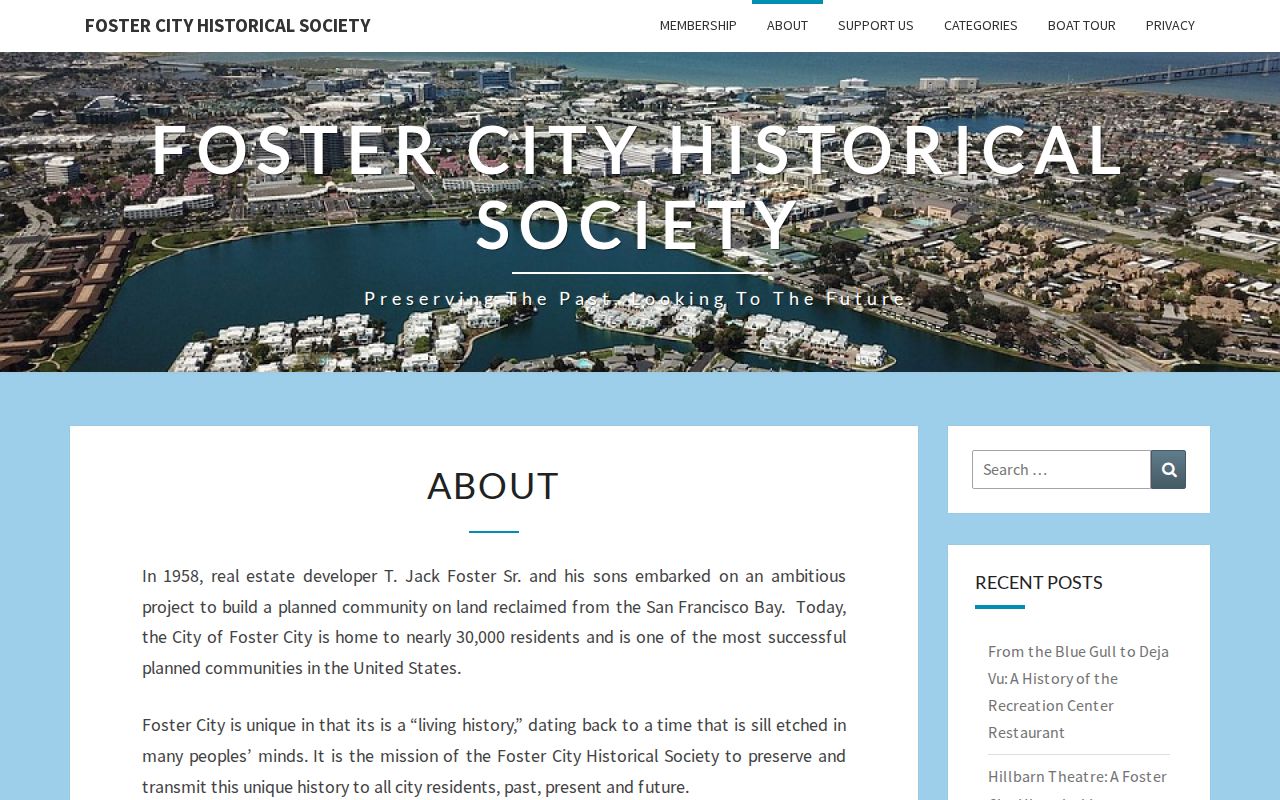
Living-memory sources are not substitutes for a deed or certificate, but they can supply the right neighborhood, builder, tract, or family name for the next search.
Foster City's April 16, 2026 service-restoration notice records the return of eTRAKiT and other online services after a cybersecurity incident.
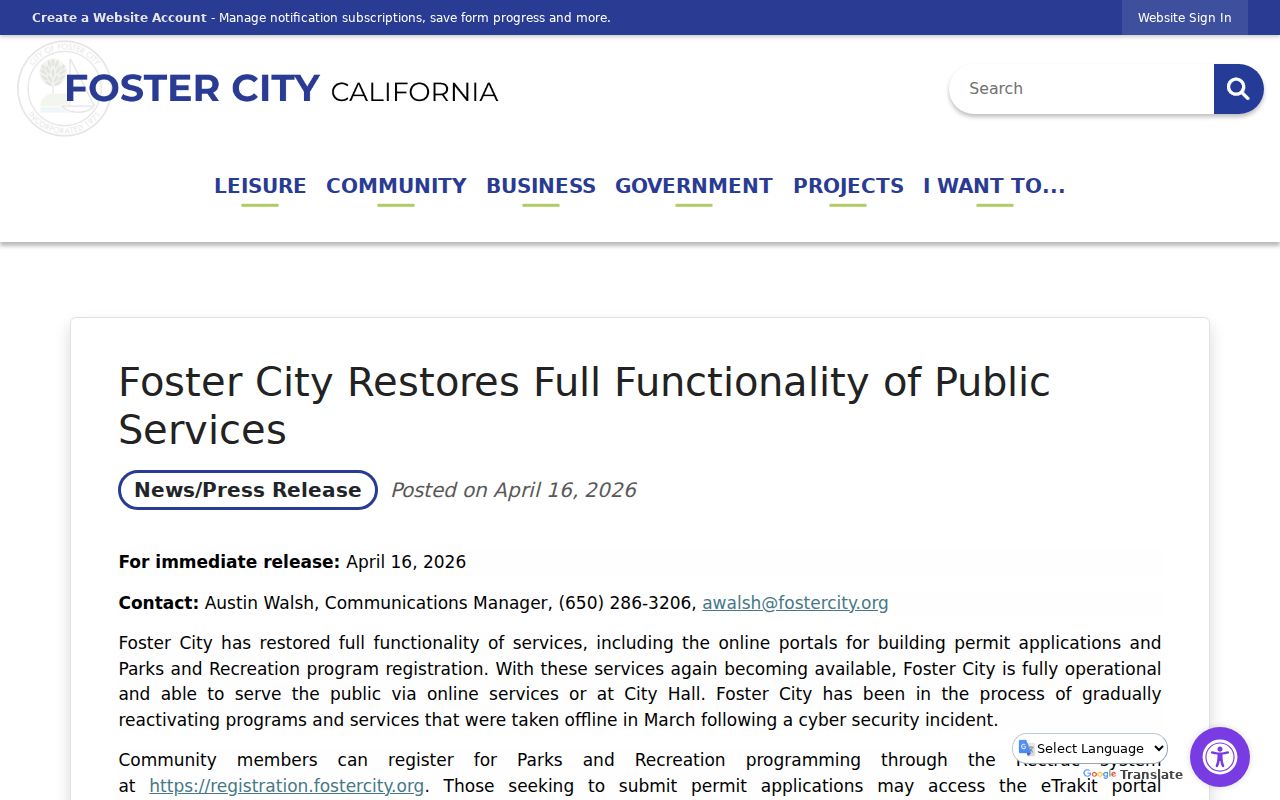
The recent notice is a useful reminder to keep an offline or counter fallback beside a digital collection search.
The city's planned form makes those terms valuable. The cultural-resources study names builders including Eichler Homes, Duc & Elliott, and Kay Homes, while the community profile describes nine original residential neighborhoods. Search those identifiers beside a street and date.
That builder and tract vocabulary is often more useful than a broad city-directory query. It can point a researcher toward a subdivision map, an early permit, a neighborhood publication, or an oral-history item that explains how an address entered the city record.
When a directory find needs a current record check, the Foster City resident lookup workflow separates property, court, vital, business, and public-status evidence instead of blending them into one profile.